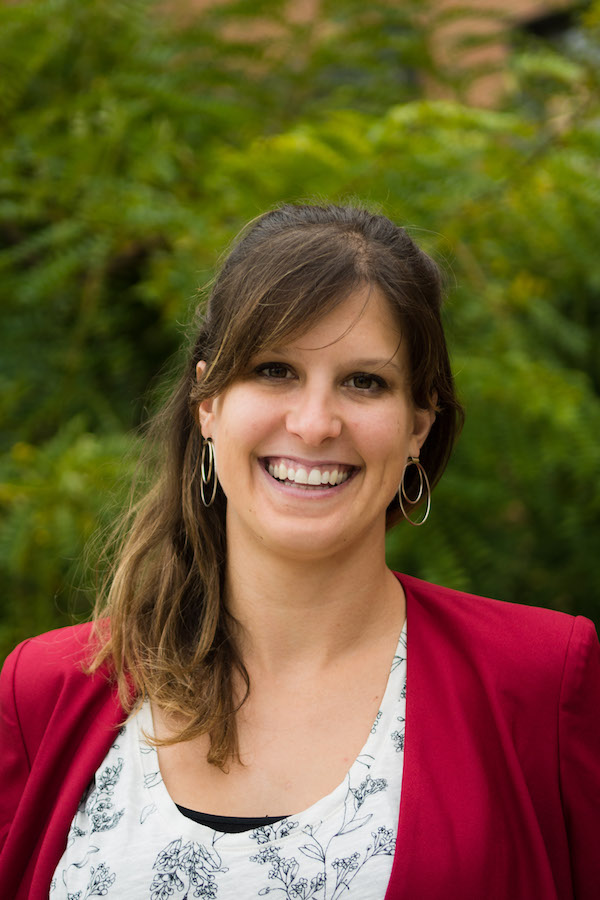
Professor Kelly Bodwin, Associate Professor of Statistics & Data Science at Cal Poly, will be speaking about "Using Network Analysis to Investigate Poland’s Round Table Process" on Wednesday, September 30th, 2026 from 3:30 - 4:30pm in HSSB 1173.
(joint work with Dr. Gregory Domber, Cal Poly History Department)
Abstract:
Between the late 1940s and the collapse of Communism in 1989, the Polish United Workers Party (PZPR) controlled nearly all facets of political and social life in Poland. Over this entire period, however, Poles formed groups to both reform and actively oppose the Communist system, most famously with the formation of the independent, self-governing Trade Union “Solidarity” in August 1980. The culmination of this movement was a set of Round Table meetings between members from the Communist government and the opposition movement, which convened in Warsaw in February 1989 and resulted in a peaceful transition to a Democratic government later that year.
In this talk, we share the details and results of a decade-long collaboration to turn hand-collected analog data into statistical insight. The primary contributions of this work are threefold: (1) we discuss and present a rich data package consisting of activities and organizational affiliations of 567 Round Table participants from 1945 to 1989; (2) we provide an overview of a purpose-built Shiny App for longitudinally analyzing the Round Table datasets, paying particular attention to the challenges of structuring data and analysis to reflect real-world conditions; (3) we fit and assess a penalized logistic model to provide insight into which activities and organizations are predictive of particular affiliations at the 1989 Round Table. We also discuss ongoing work to assess the influence on this process via East-West exchange programs.
Bio:
Kelly Bodwin is an Associate Professor of Statistics and Data Science at Cal Poly in San Luis Obispo, CA, where she primarily teaches courses in statistical computing and data science. Her current research interests include cross-disciplinary work in the Digital Humanities, analysis of high-dimensional biological data, methodologies for assessing cluster validity, open-source software development in R, and Data Science education.