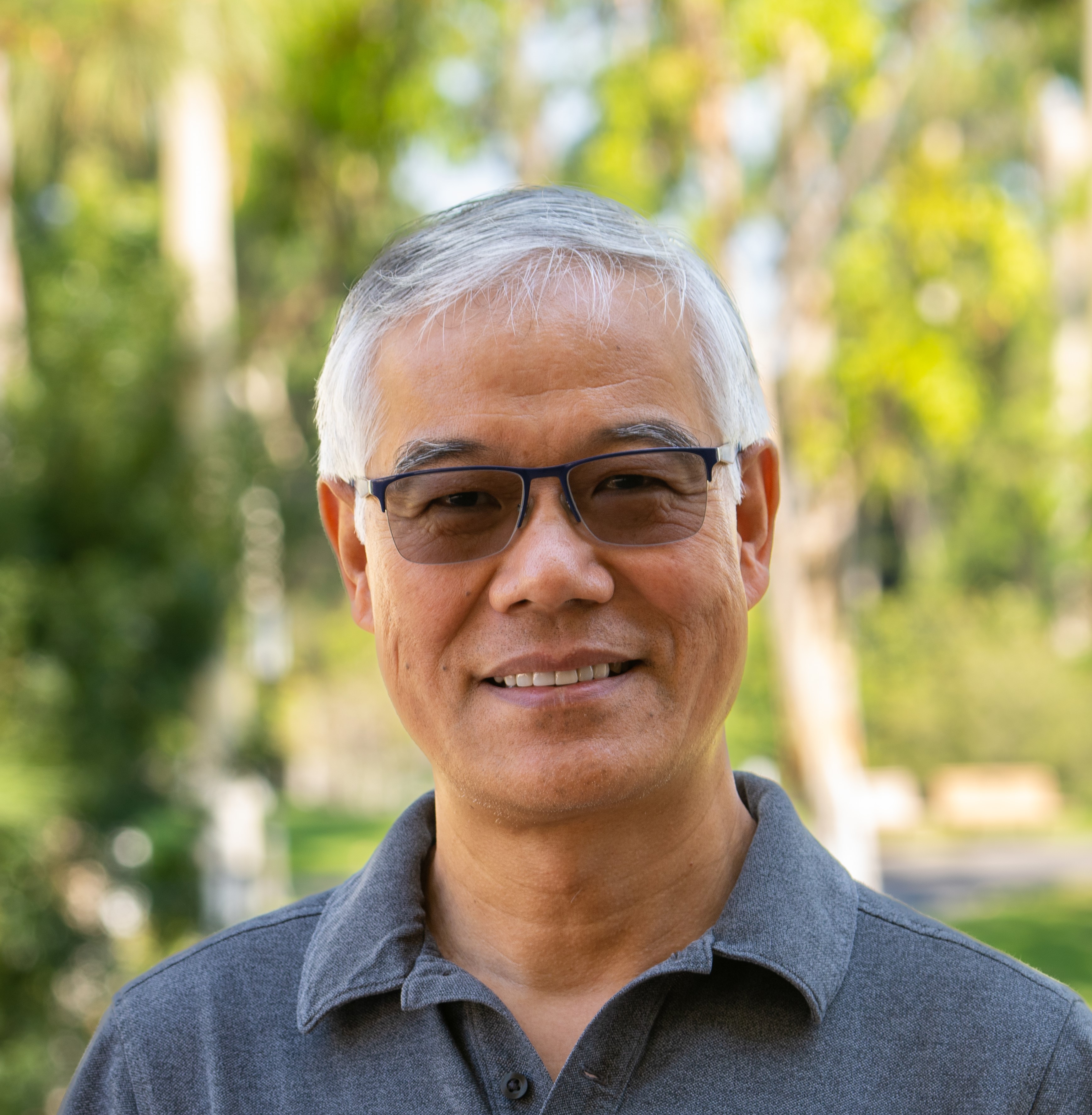
Dr. Bin Nan, Chancellor's Professor of Statistics at UC Irvine, will be speaking about "Nonparametric Conditional Distribution Estimation and Conformal-Style Inference" on Wednesday, May 20th, 2026 from 3:30 - 4:30pm in HSSB 1173.
Abstract:
We consider estimating the conditional cumulative distribution function (CDF) using neural networks for a continuous
response variable. The loss function is based on the full likelihood where the conditional hazard function is the only unknown
nonparametric parameter, for which unconstrained optimization methods can be applied. We then construct optimal percentile predictive intervals using a conformal-style calibration method for the continuous responses obtained by the probability integral transform (PIT) of the estimated conditional CDF. Our percentile calibration adapts to the empirical PIT distribution, which is robust against a possibly imperfect estimation of the conditional CDF, and meanwhile captures local variability more effectively than existing methods, leading to the shortest interval lengths. We prove the finite-sample marginal coverage property of the proposed method and show its asymptotic conditional coverage under mild conditions. Experiments on diverse synthetic and real-world benchmarks demonstrate better conditional calibration and substantially shorter intervals than existing methods. This is joint work with Bingqing Hu, April Zou, and Wanrong Zhu.
Bio:
Bin Nan is Chancellor’s Professor of Statistics at the University of California, Irvine. He obtained his Ph.D. degree in 2001 from the Department of Biostatistics at the University of Washington. He had been on faculty in the Department of Biostatistics at the University of Michigan from 2001 to 2017, meanwhile holding a courtesy appointment in the Department of Statistics at the University of Michigan. He joined UC Irvine in 2017. Professor Nan’s research interests are in various areas of statistics and biostatistics. He studies semiparametric inference, failure time and survival analysis, longitudinal data analysis, missing data and two-phase sampling designs, high-dimensional data analysis, and machine learning methodology. He also collaborates on projects in the areas of epidemiology, bioinformatics, and brain imaging, particularly in Alzheimer’s disease research. His research activities are constantly supported by NSF and NIH grants. He is Fellow of the Institute of Mathematical Statistics, Fellow of the American Statistical Association, and Elected Member of the International Statistical Institute.