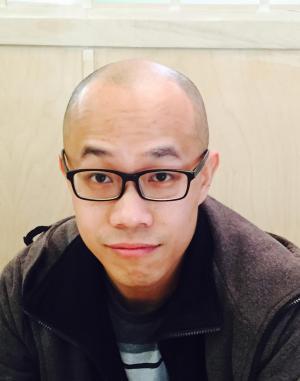
Prof. Mengyang Gu from the Department of Statistics & Applied Probability will be discussing about "GaussNet: A Gaussian process network accelerated by the inverse Kalman filter" on Wednesday, March 4, 2026 at 3:30pm in HSSB 1173.
Title:
GaussNet: A Gaussian process network accelerated by the inverse Kalman filter
Abstract:
We introduce GaussNet, a new neural network architecture that requires much less data for predicting nonlinear maps than conventional neural networks. We derive the closed-form expressions of the predictive distribution and gradients to train GaussNet. To solve the computational challenge, we develop the inverse Kalman filter, which enables exact matrix-vector multiplication between a covariance matrix from a dynamic linear model, including the Matérn covariance matrix with a half-integer roughness parameter and a real-valued vector, with a linear computational cost to the dimension of the vector. We integrate the inverse Kalman filter with the conjugate gradient algorithm, which substantially accelerates the computation of matrix inversion for an additive summation of covariance matrices, where other approximation approaches may not be directly applicable. We demonstrate the scalability and accuracy of GaussNet accelerated by the inverse Kalman filter for predicting nonlinear relationships with general multi-dimensional inputs compared with neural networks and approximation approaches of Gaussian processes, such as the Vecchia approximation and local Gaussian process approximation. Other applications include nonparametric estimation of particle interaction functions from simulation and microscopy videos of cells.
Bio:
Mengyang Gu is an associate professor in the Department of Statistics and Applied Probability at UC Santa Barbara. He obtained a PhD in Statistical Science from Duke University. He focuses on developing accurate surrogate models and inverse estimation approaches for applications in physics and materials science. He has expertise in Bayesian analysis and uncertainty quantification. He received the SIAM activity group on uncertainty quantification (SIAG/UQ) early career prize in 2022.